
The Major Blog Traffic Collapse: What Australian Businesses Need to Do Now

What the research actually shows
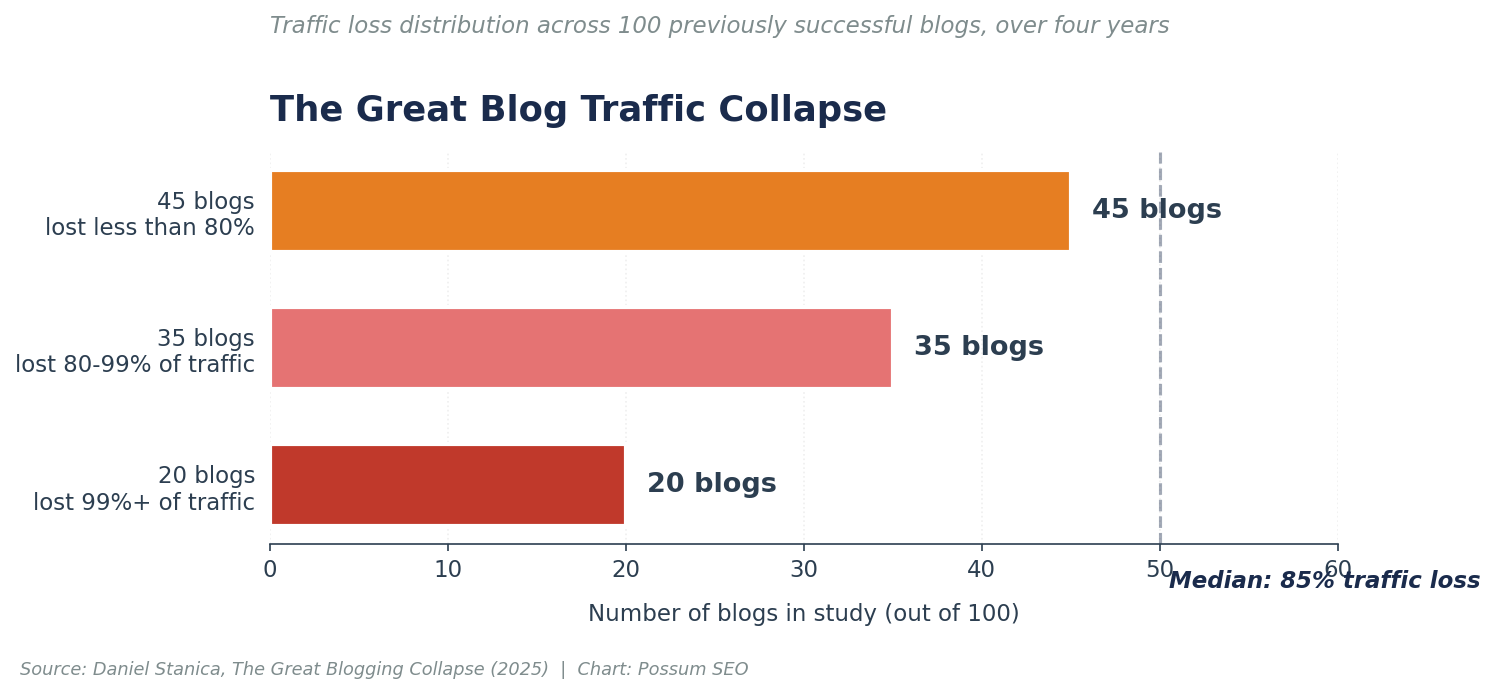
For Australian small businesses, the takeaway is uncomfortable but clear. If your marketing plan for 2026 assumes the same organic traffic you were getting in 2022, that plan is already broken.
Why is blog traffic collapsing?
The first is Google’s Helpful Content Update and its successors, which have systematically devalued generic, thin, or AI-generated informational content. Sites that scaled content production without genuine expertise have been hit hardest.
The second is Google’s AI Overviews. When a user searches for an informational query, Google now often generates a direct answer at the top of the results page, drawn from multiple sources but rarely sending a click to any of them. Rankings can stay stable while clicks evaporate.
The third is the rise of large language models as answer engines. ChatGPT, Gemini, Perplexity, and Claude are now where a growing share of research queries begin, and they answer the question inside the interface. The user rarely visits the source site. The traffic your blog used to earn from a “how does X work” query is now being absorbed at the point of answer.
The net effect is what the industry is calling the zero-click era. Your content might still be technically ranking. Your traffic is still collapsing.
What should Australian businesses actually do?
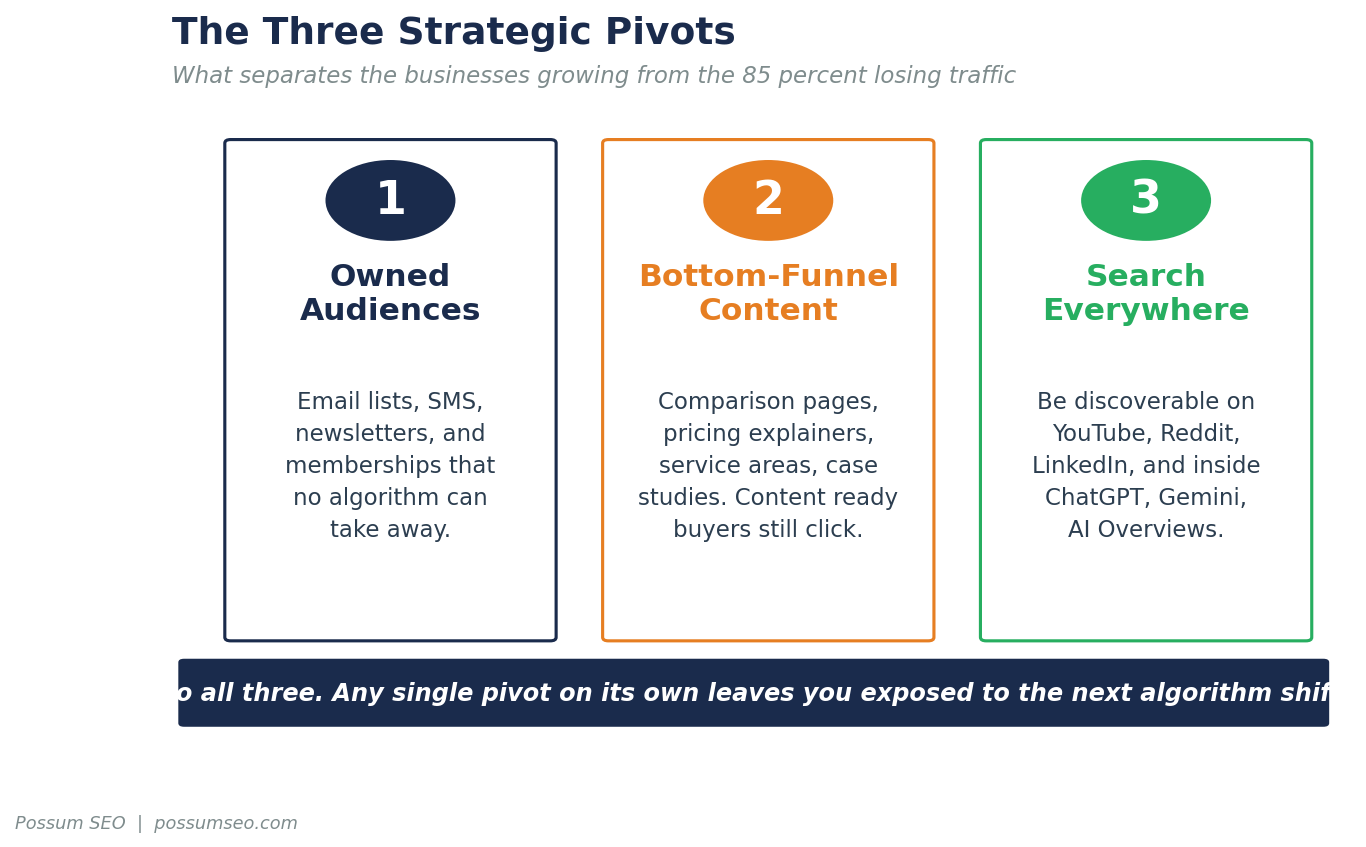
1. Build owned audiences you actually control
Email lists, SMS lists, newsletters, and membership communities are the audiences no algorithm can take away from you. If a Google update wipes out 60% of your blog traffic overnight, a healthy email list keeps your business running. Australian small businesses that treat their email database as a serious asset, and invest in growing it deliberately are proving far more resilient than those relying solely on Google.
2. Shift content investment toward the bottom of the funnel
Top-of-funnel informational content (“what is X”, “how does Y work”) is exactly what AI Overviews and LLMs are absorbing. Bottom-funnel content, the kind that helps a ready buyer make a decision, is still earning clicks and driving conversions. That means comparison pages, pricing explainers, service-area pages, case studies, and detailed product content. If you sell plumbing services in Melbourne, an article on “how water pressure works” earns fewer clicks every month. A page comparing hot water system options for a Federation home in Fitzroy is still commercial gold.
3. Adopt a Search Everywhere approach
Australian customers now research on YouTube, Reddit, LinkedIn, TikTok, and increasingly inside AI chat interfaces before they buy. Businesses seeing continued growth treat Google as one channel among several, not the whole strategy. That includes making sure your brand is discoverable and citable inside AI answer engines, which is what modern AI search optimisation is really about. Being cited by ChatGPT when someone asks for a recommendation is the new “ranking on page one”.
The measurement problem no one wants to talk about
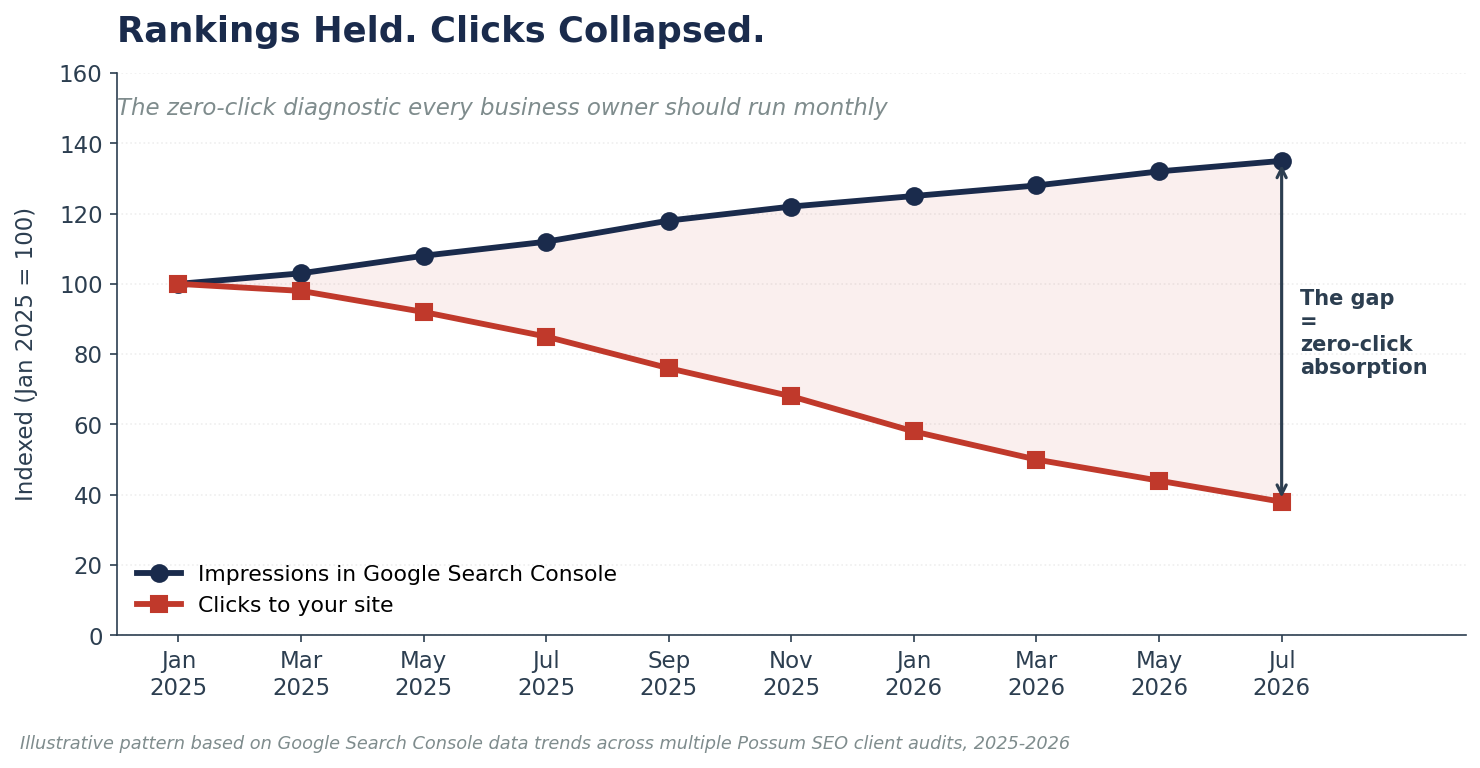
Here is the trap that catches most small business owners. Their SEO reporting dashboard shows rankings holding steady, so they assume everything is fine. Meanwhile, revenue from organic is quietly falling. The reason is that rankings and clicks have decoupled. You can be on page one and still lose 70% of your click volume to an AI Overview above you.
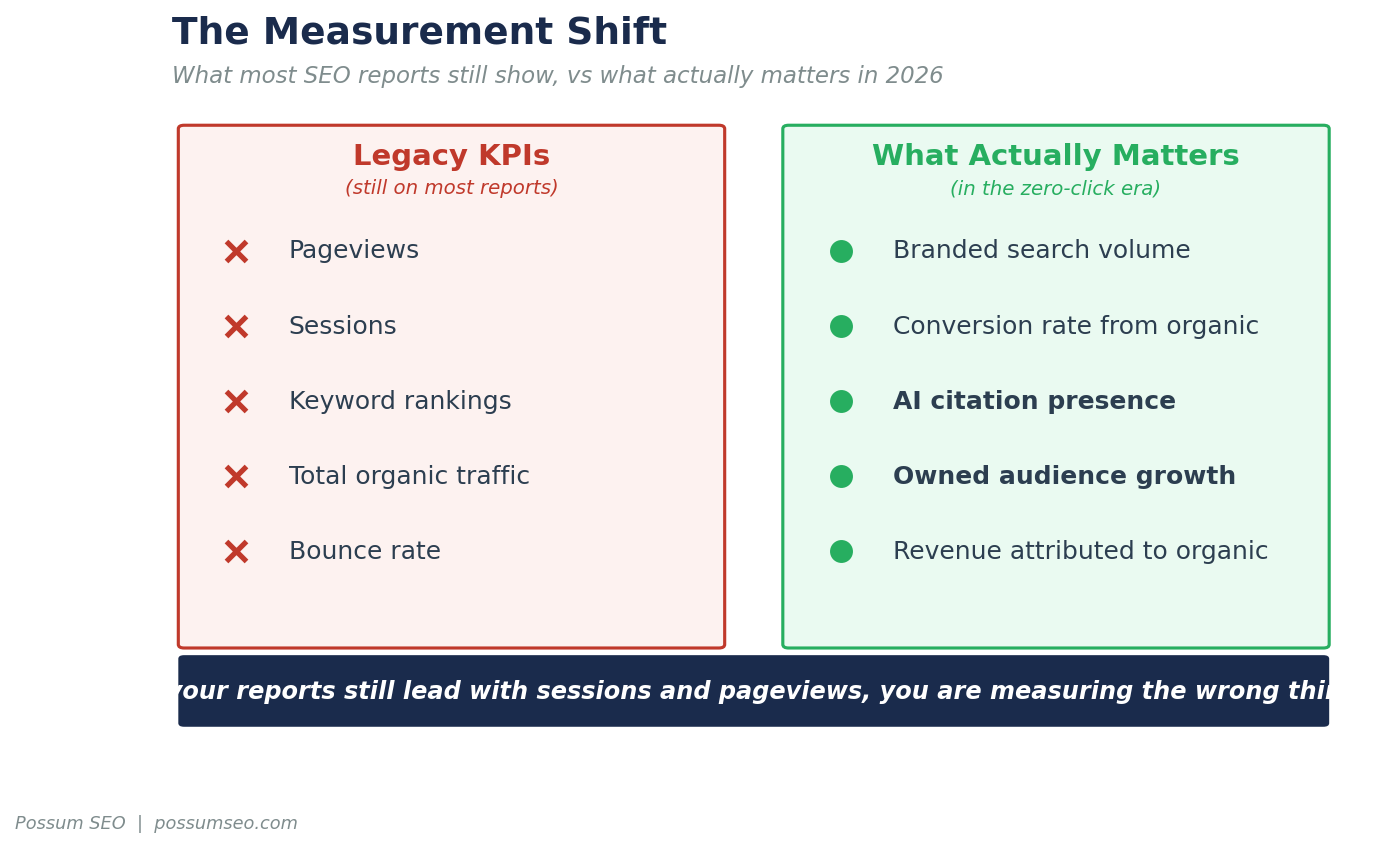
Traffic is no longer the primary KPI. What matters now:
-
- Branded search volume, which shows whether people are looking for your business by name
- Conversion rate from the traffic you do get, which reveals whether the visitors are qualified
- AI citation presence, which measures whether ChatGPT, Gemini, and Google AI Overviews reference your brand when answering questions in your category
- Direct and email traffic growth, which shows whether your owned audience is compounding
- Revenue attributed to organic and AI referrals, not sessions
If your current SEO reports still lead with sessions and pageviews, you are measuring the wrong thing.
Common questions Australian business owners are asking
Is it worth writing blog content at all in 2026?
Yes, but with a different purpose. Content that demonstrates first-hand experience, targets bottom-funnel intent, and gives AI engines something worth citing still earns its keep. Generic informational content does not.
How do I know if my traffic has already been absorbed by AI?
Compare your impressions to clicks in Google Search Console over the last 18 months. If impressions are steady or growing while clicks fall, AI Overviews and zero-click answers are the likely cause.
What should I do first?
Audit your current traffic composition to see what is still earning clicks, what is being absorbed, and where your owned-audience gap is. That is exactly the kind of work a technical SEO audit and content review are designed to surface.
The businesses that come through the zero-click transition well are not the ones with the biggest content libraries. They are the ones with the clearest point of view, the strongest owned audiences, and the discipline to invest in content that still converts. If you would like a straight assessment of where your business sits, get in touch.

Nirav Shah is the founder of Possum SEO. He is an SEO consultant and individual SEO freelancer based in Melbourne, Australia. He helped countless clients improve their online presence and reach their target audience with a proven track record of leading hundreds of successful SEO campaigns across competitive industries like healthcare, eCommerce, legal, SMB, SaaS, and B2B. He is well-versed in the latest SEO best practices and constantly strives to stay up-to-date with the latest trends in the industry.